
Since releasing the new Carrero books so close together, people have asked how I manage to write so quickly, especially fellow authors and new writers struggling to get started.
I understand why. From the outside, it probably looks as though I sit down, type at a ridiculous speed, and somehow produce a finished book a few days later. In a world where AI can generate text in seconds, releasing books quickly can also make people wonder how much time, thought, and work really went into them. The truth is that I have always written fast. Sadly, I do not have a secret tip to help you do the same because I have certain superpowers that make me this way. I can also read a 600-page book in roughly five or six hours without skim-reading or losing the details.
What readers see is the time between me announcing a book and releasing it. What they do not see is how long that story may have already been growing in my head, how completely it takes over my life once I begin writing, or how many stages it passes through before I consider it finished. My books do not begin when I open a blank document. They often start weeks or even months earlier through music, images, daydreams, research, and scenes that will not leave me alone.
I have been doing this since I was very young. I wrote my first children’s book in primary school and won a competition with it. I wrote my first romance novel in my very early teens and was offered traditional publication by one of the Big Five. So it’s safe to say my process was forty years in the making. I am not a writer who problem-solves through the actual writing process, pondering chapters endlessly.
I have never really explained my full process because it is hard to explain something that doesn’t follow a fixed formula. I know, right? My bad… In a world looking for guidance, cheat sheets, and rules, I have none.
My methods can change and sometimes appear erratic to outside eyes. I have always had a strongly technical brain while also being highly creative, so unfortunately that means I live and breath creativity while having the skill to drag it into some kind of logic. Those two sides of me have sat together since childhood, usually arguing over which one should be in charge. My creative side produces the characters, emotions, music, and moving scenes. My technical side files the details, finds the patterns, builds the structure, and makes everything connect. I do not think I could write the way I do without both of them working together because I have a fifty-fifty split brain. And having a side hobby that is an obsession with psychology doesn’t hurt.
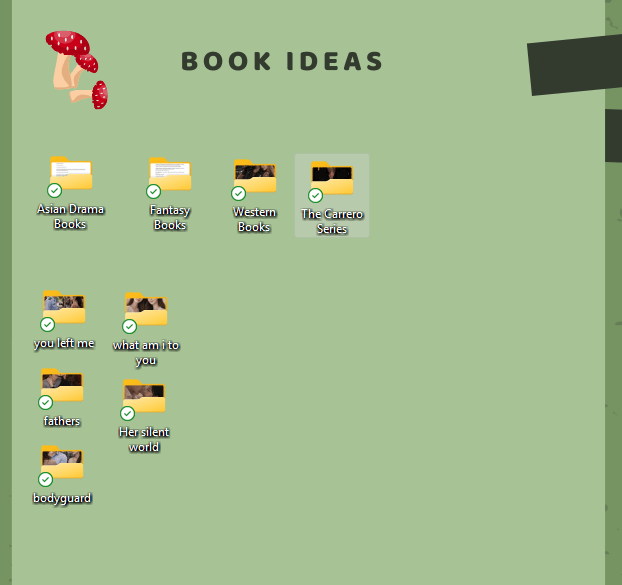
In some ways, my head operates like a computer in a way that many people’s minds do not. I constantly collect, sort, and file information, even when I am not consciously working on a book. It may look chaotic and sporadic to others, but my secret files and folders are organised better than the FBI archives. Images become visual folders, music stores emotion, and a cover can act almost like a shortcut to an entire story. One glance or sound can open the correct mental file and bring back characters, scenes, research and tiny details I stored weeks or even years earlier.
I have a terrible memory for most things, but show me one book cover, and I can unlock two years’ worth of thoughts, ideas and dialogue filed inside that one story. That unusual internal filing system affects how I plan, how I remember, and how quickly I can turn what has been developing in my head into a finished book because every story arrives differently. Some come almost fully formed, while others make me work for every layer. Sometimes I know almost everything before I begin. Sometimes I know where I am starting, where I need to finish, and very little about how I will get from one to the other.
I wish I could give you a neat little routine. I would love to say that I sit down with a fresh notebook, plan every chapter, write a sensible number of words each day, and take regular breaks like a well-adjusted human being. The truth is I cannot. I literally let my story evolve through collecting random pieces like a magpie.
That is not how I work. 😂
So, this is the closest I can get to explaining how I work. Maybe it will help you find your own way too.
Stories Do Not Always Begin on Purpose
I do not normally decide, in a very organised way, that today is the day I will invent a new story, or even which idea I will begin working on. Usually, one forces its way to the front and starts stalking me relentlessly throughout my day. Every time I turn around, I catch a character peeking at me from the bushes, and they simply will not shut up about what trauma they are experiencing in that moment. The first spark can come from anywhere. It might be a line in a song, a scene in a television show, or something completely ordinary I happen to see outside. It could be a random thought or even a two-second conversation I overhear. What it always is, though, is a highly emotionally charged moment between my two leads and a conversation that gives me enough fuel to kick-start a whole story. I mean, I am a romance writer.
My brain treats everything in life as open season, and I will steal almost anything, including your boyfriend’s name. I am a thief. LOL. Seriously, though, never confess anything embarrassing around me because I will store it for future use. Sometimes I watch a drama, especially an Asian drama, and get interested in a particular trope even when I don’t like the plot. I start thinking about what I would do with that idea instead, and my own version begins to form. Sometimes I read a short story or watch a random vertical drama online and, poof, another new idea appears. The source of the spark usually shapes what happens next. Proof of this is the fact that the original Carrero Effect trilogy was written inspired by Fifty Shades of Grey because I did not like how trauma was handled or how the romance played out. That was my inspiration.
If it comes from a song or a scene in a show, I immediately visualise something connected to the emotion it created. I do not necessarily see a complete plot. I see one moving scene, and that scene will hound me. It grows and develops depth and meaning over the next few days, replaying inside my brain like an annoying earworm. I have what I call a movie memory. I think in moving, noisy pictures rather than still images. In my head, I can see the setting, hear what is happening, and experience the atmosphere. I can imagine how something feels, smells, or tastes. It plays like a film rather than a written description. Basically, I torment myself with a five-minute clip from a film I desperately want to watch, except no one has made the rest of it.
The people in that first scene are not always clear. They can be slightly creepy, faceless figures in the beginning. I am fairly sure there is a horror film featuring those people. I might know their hair colour, body shape or the way they move, but I cannot properly see them yet. They are loose forms standing inside an emotion. I can feel what they feel, though, and I become stuck reliving it until I can explain why it is happening. Then I begin working backward.
I build the people the story needs
So what do I do after the spark of inspiration hits and I want that specific idea to grow wings? Well, I focus on what I want from that first scene because it’s the root of all evil, LOL. What is the trope? What is the scenario? What kind of relationship would create this moment? What needs to have happened to make these people behave and feel this way? Who are these people and how do they feel about each other? From those questions, the characters begin to become real. The tech part of me analyses and what’s answers. This is the same tech part who continuously researches, learns new things, and hungers for enlightenment.
If I am writing a Carrero book, certain specifications and family traits already come with being a Carrero, so that part is easy even if it sounds like I’m cheating. Otherwise, I let their appearance build around what I deem attractive enough to keep me invested in that moment with some loose ‘hot’ features. That gives me a foundation, but I still build each character around the personality the individual story needs. Their appearance develops alongside that personality no matter how they start in my original idea. I think I am quite good at creating a face that suits the person in my head after I start giving them personality traits. Once I understand who they are, the blurry figure becomes more defined. Their features settle into place, and eventually I can see them properly. I do not invent a face and then decide what kind of person should live behind it. I create the person the story needs, and their face follows.
That can range from giving them a birthday, star sign, pet hate list, and even background trauma. I imagine what someone who lived that life and behaved that way would look like. I take into account their financial stats, job and relationships, and they sort of grow their own faces. I will even mock up some photos from the collection of the many I gather in my hoard and try and pinpoint one look per character so I won’t deviate. They are not always my ‘cup of tea’ but they fit the story. Because I am a visual writer, this step is super important to put my actors in scene and play out their moments in my brain. They are no longer faceless but are now living, breathing humans with bad moods, quirks, and favorite beverages.I usually save an entire profile as a PDF in case I later forget what color eyes they have or an allergy to marmalade.
This is all before I even step into expanding their story. The people, the visuals always come first. I know them, i think how they think and I can predict all that they do. I even know why they wake up at 2am every night, gasping for air with the nightmares from their childhood. I have witnessed it all.
I need anchors, not a rigid map
So next, with my suitcase of random people I just met but somehow now intimately know, I will hold their hand and guide them to the next step. Building their world and the torture I am about to put them through. It’s sort of like raising children except you purposely throw them in harm’s way for your own entertainment in a very cleverly constructed game you won’t let them escape. Did I ever mention I am a little bit of a sadist, LOL.
Once I understand the central relationship and the kind of story I want to tell, I begin planning. YAY, something that’s useful for y’all.
For a standalone, I normally work out the start, midpoint, and final goal of the whole book, thinking up dramatic peaks and happy ever-afters. If I am beginning a trilogy, I focus first on those same anchor points for Book 1, minus a happy end, because that would make the following two books boring. I need to know what I am aiming for in the whole story to start building the events around those points and beyond. Those points keep me moving in the right direction, but I don’t necessarily map every chapter and scene in advance.
Once the anchors are in place, I mentally work through everything between them, and this stage can take anywhere from a few hours to days depending on how easily I have left myself a path and how complex the situation is. I think about the story in the shower, while I am doing other things, and when I am supposed to be sleeping. While I’m cooking, eating, sitting in the car, and sometimes while people talk to my face and assume my blank expression is my deeply empathetic way of listening to what they are telling me. I daydream scenes. I research details. I lucid dream and sometimes solve problems in my sleep (yes, I know that is unusual and weird). My brain keeps filing away information even when I am not consciously trying to write.
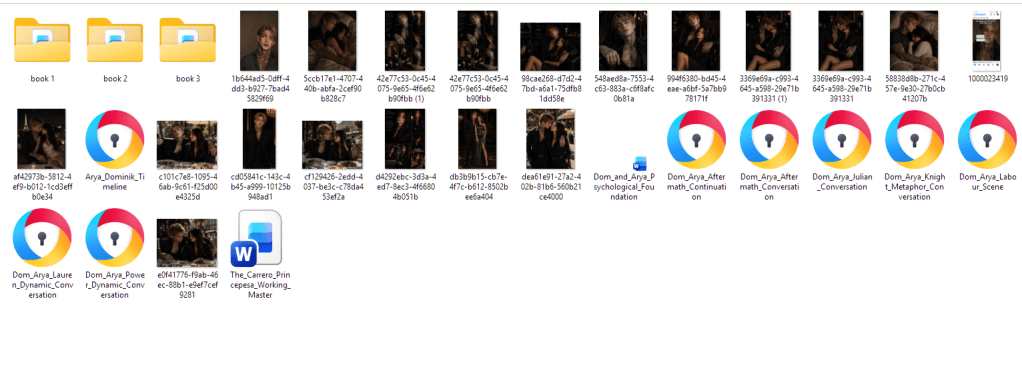
I also begin collecting things. Photos, songs, scenery, research, and random details all go into files under the book title. I make notes and create PDFs containing anything I think I might later forget. If a topic requires a lot of real deep research or medical notes, I will spend an entire day using my ASD gift of becoming a master of random topics with unwavering hyperfocus and educate myself mindlessly. I will leave no stone unturned and churn out a fifty-page thesis of notes just to be able to describe one medical scene accurately. I swear I now have so many ‘special interests’ from writing books I could have some kind of PHD. Strangely, I rarely open those PDFs again. Once is enough. The act of finding and organizing the information seems to store it in my mind, and I make the files as a backup, but simply creating them is often enough.
The cover comes before the book
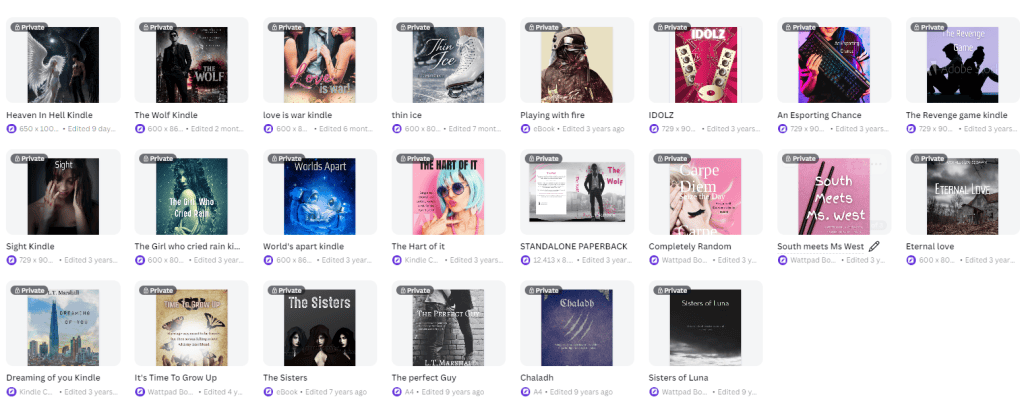
Ok, so I know you are wondering what I mean by this, since conventionally authors make their cover after the book is ready to meet the general public, but I don’t. The next thing I do is make a cover myself, and this is almost a religious tradition that signals an idea has become a work in progress and has earned the spot of being written. It breaks my brain out of being overly obsessive about continuing research, building more profiles, or daydreaming too many scenes. I have a tendency to start buffering in that spot for too long if left unattended, creating an entire fifty-year plot for my main leads with no end in sight. It’s the signal to ‘shut up, sit down, and let’s begin.’The ideas that get covers are in the short list of do it real soon.
For many authors, the cover comes at the end. For me, it is part of building the story. It’s my official starting point, where I can throw it at my betas and, with one glance, tell them the entire idea in a very long breath. By this point, I normally have a strong sense of what I want. Designing the cover cements the vibe of the entire book in my head. It is like laying a foundation that will not deviate. It fixes trope, outcome, and who lives inside it. The cover also becomes a visual memory key. Once it exists, I can look at it and recall the story attached to it. The atmosphere, characters, important scenes, and tiny details all come back through that one visual cue. That means I can safely lay that idea aside in a folder and not think about it until later. When I open that cover, out pop the stored memories, and I can begin as though I only spent the previous week creating it, even if it has been weeks.
I may have PDFs full of notes sitting in the background, but most of the time I only need to look at the cover.
I store ideas in images
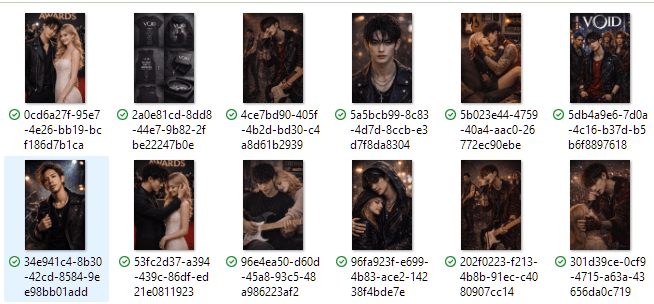
The cover is the biggest visual key, but it is not the only one. It may be the door to which all life hides behind, but what accompanies it is just as important. Images are how I store a lot of my ideas and details. Instead of writing pages explaining the atmosphere of a room, the shape of a landscape, or the feeling of a particular moment, I can save one image and attach all of that information to it. Even one entire scene between leads can be stored in one photo. One glance brings the whole idea back. And despite the world being anti-AI right now, it has its uses in creating my faces, my rooms, and even my decor for a file that most people will never see. It pulls from my brain what I can visualize with very in-depth prompting (oh, trust me, I can generate fifteen pics of one thing before I have what I want) and helps clear out all the cluttered corners for me. I turn ideas into solid visual prompts without an expensive crew of photographers, models, and all that comes with creating that one image. I use Adobe Stock among other stock photo and video sites to help with this too. (Yes, it costs me a small fortune)
As I collect those pieces, the character becomes clearer in my mind. Eventually, I stop seeing the reference images and begin seeing the complete person they helped me create. Even my ref pictures are sometimes just not close enough. This is why my book folders contain so many seemingly random pictures. They are not random to me. They are visual notes, memory triggers, and fragments of the world I am building.
Music is where I find the feelings
Music is one of the most important parts of my process alongside visual cues. In fact, maybe more important than them in some cases. It can be the original spark for a story, but it also helps me grow the idea once it has begun. During that development stage when I am figuring out the in-between chapters of a plot, I listen to music constantly and watch music videos. Music is my main source of feeling and emotion, so I deliberately search for songs that match what I want a scene or relationship to feel like.
Sometimes I already know a song that fits, then I search for similar ones. Other times I will sit on YouTube, type in an emotion, and listen until I find the sound I need. Every book normally develops some kind of playlist that helps me form a coherent story while introducing the right feelings at each point. The songs can serve completely different purposes. One might belong to a specific character. Another might connect to a plot point, a relationship, or one scene. Sometimes a song is there simply because it carries the right vibe.
In most cases, I organise the final playlist in the same order as the plot. It becomes an emotional version of the book, moving from the beginning through the major moments and towards the ending. I listen to those songs at different intervals throughout the entire writing process. When my brain needs a break, I might play through all of them. It lets me stop actively wrestling with the manuscript while strengthening the feelings that belong to it. When I return to the page, the emotional world has been refreshed.
I also write my own lyrics and create digital songs connected to the books. The main theme song usually covers the whole trilogy, although it tends to focus most strongly on Book 1 because that is where the foundation of the couple and their journey begins. Music did not suddenly become part of my writing process because I decided my books needed playlists. I grew up in a musical family, surrounded by bands, rehearsals, sound checks, and venues, and later performed in both a pop girl band and an indie rock band. I wrote lyrics when I was a singer, so creating original songs for my books is really an old part of me finding a new place to exist. I still play the drums for my own enjoyment, and someone once told me I write like a drummer because I naturally look for rhythm in my paragraphs. I hear where words should hit, where a sentence needs to stop, and when a scene needs space to breathe. Music has always been one of the main ways I understand emotion, timing, and storytelling, so it makes sense that it followed me into my books.
So with my huge box of ideas, images, music, and covers, and extensive PDFs on research and character profiles, what now? Are you starting to see why actually writing the book is the shortest part of my process? LOL

The three books do not arrive in the same way
To the writing, and even that is never a process set in stone. It also varies between writing a series book or a standalone.
For a trilogy or two part, book 1 is normally the clearest in my head. Because I let it stew for weeks before I begin, by the time I sit down to write, I know the plot extremely well. It has haunted me, interrupted my thoughts, and collected enough scenes, images, music, and research for long enough that it is almost already written. It’s just sitting there screaming to be let out. So that’s what I do, and in one long outpouring I can churn out the completed A to B in pretty much five to seven days. That’s a rough draft because this process is far from done.
Book 2 is usually clear enough because I have strayed that far mentally. I know where it needs to go and what it needs to achieve. Depending on how many weeks or months I let this specific plot churn in the developmental stage, I can sometimes even push out that book with the quiet confidence of a know-it-all.
Book 3 is different though. I normally know how it begins and how it must end, but I cannot fully plan everything in between because it has to tie up threads from Books 1 and 2 that I have not written yet. Some of those threads do not even exist until the earlier books create them. Especially because I have a habit of not recognizing my own genius in how some things play out or line up in subtle ways, and I can’t see it until I get to this point. Oh trust me, I have had many AHA and lightbulb moments in a book 3 and immediately thought how clever I was. I have to trust that I will deal with them when I get there.
That is why Book 3 is usually the slowest and hardest book to write. It has the technical job of gathering everything together, but it carries the emotional weight too. It has to deliver the ending the characters deserve, satisfy the journey, and give me enough closure to let them go.
Standalones are way more straightforward. I usually know how it starts, peaks, and ends, and in one swoop I can get the whole thing out without breaking too many brain cells….I wish I had the urge to only write in standalones. My life would be so much easier.
The first draft depends on how long the story has been waiting
Once I begin a first draft, I work through the scenes in order from start to finish. I am not one of those weirdos who write random ones and later jigsaw them together with the competence of someone who is better organized. I have no patience for that, and I get easily confused despite sounding quite competent in this process. I prefer linear storytelling so I can remember at which point my main leads wanted to start stabbing one another.
What that draft looks like depends on how much preparation happened before I started.
If a story has been bothering me for weeks, growing while I collect information and dream scenes, the first draft may not be far from a finished book. It has percolated enough in my head that it only needs releasing into the wild. If I have not allowed much time between books, the draft can be much more basic. A scene might contain the essential action but still be missing some dialogue, description, emotional depth, and padding. It is the bare-bones version that I will build on later. Like I said, this varies depending on how much effort, energy, and wasted hours staring into space came prior to remembering I have a desk and should use it.
This is why my speed on the page does not tell you how long a book has really taken to create. A huge amount of writing happens before I physically begin typing. Sometimes for weeks or months. The Carrero Connection was first thought up six whole months ago, and I have been chewing on it ever since. Researching and compiling. That should tell you that my fast release of all three can not be dwindled down to the six weeks of writing, editing, and polishing that came with it once I got to my desk.
For seven days, I become an antisocial weirdo
I know, I know…how do I actually work? You’re probably also wondering what happens when I have a rough draft or three sitting on some chaotic desktop, fighting its way out of images, songs, and random clutter.
I am a speed writer, and I hyperfocus because I have ADHD and ASD. It explains a lot about my skill and my inability to self-regulate like a normal healthy person. I also have no life because I exhausted it in my twenties with a short bout at attempting alcoholism (I’m Scottish; it’s a rite of passage) and excessive visits to nightclubs. Having kids and a boyfriend by mid-twenties really did prepare me for a later stage of never wanting to crawl out of my goblin hole, which suits authors particularly well. My friends think I only exist in Facebook Messenger, and even the one who lives across the road goes weeks wondering if they should report me missing.
When the first draft begins, my normal workday involves waking up, going straight to my desk, and staying there like a mentally incompetent introvert. Clothes are for the weak, as are showers or nutrients. I rarely move until bedtime. I generally do not properly leave that world until the draft is finished. My family has to fend for itself. We eat a lot of takeaway. 😂
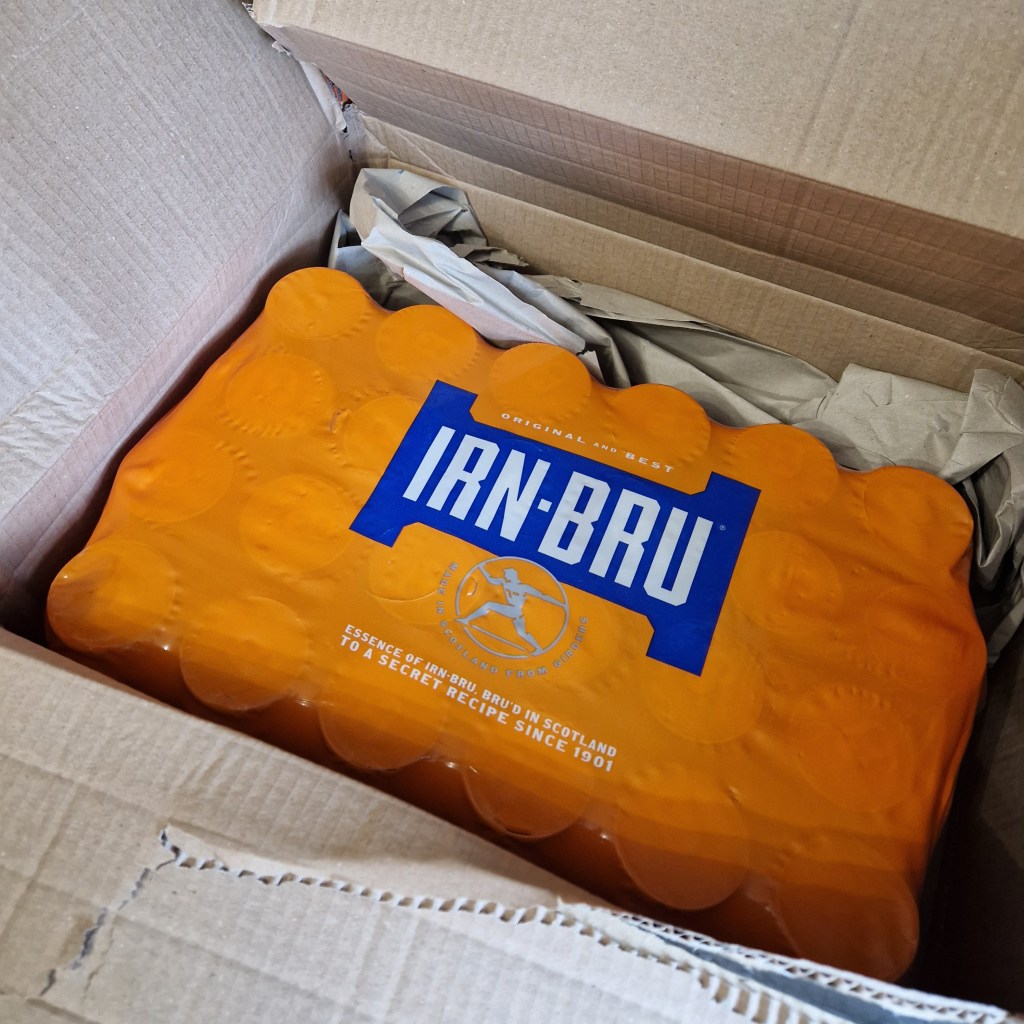
For roughly seven solid days, I am basically an antisocial weirdo surviving at her desk in pyjamas, drinking tea and Irn-Bru. I growl at people who come too close, and I mutter under my breath to strange imaginary victims only I can see.
The book does not stop when I walk away from the keyboard. I see it continuing in my head while I shower (way less than I should mid-book writing) and when I go to bed. I can zone out absolutely anywhere while working through a scene problem. Even in Tesco while my fella drags me around by the hand like an unruly toddler and gives up asking for input on which bread we want that day. He’s used to the blank, zombie-like state of zero interaction that looks a lot liek thinking. I lucid dream, which is pretty cool, but it has woken me up when they won’t behave, and sometimes I wake with the answer to something that was not working the day before. Some call it obsessive; I might agree. I think there is a possibility I was dropped on my head as a child.
During that time, the characters feel like real people. I too become attatched ot them. I have been told I am a method writer because, in my head, I become my main female lead. I do not simply watch her from the outside. I enter the story through her and understand the world from where she is standing. I feel what she feels, sort of; I love the things she loves, and her voice, her accent runs through my brain whenever I type. The odd part is that her emotions don’t fully affect me in real time. I can visualize what she should feel and create those emotions as I type, but I write in an almost numb state, looking down at them. My mind seems to hold everything back while I am working. The emotional processing comes later.
My beta team reads while I write
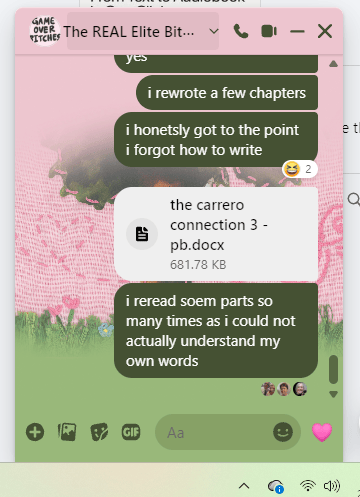
In all this chaos, I have a shining light in the form of a beta team who remind me that humans exist in my time of need. Otherwise known as writing a first draft. My beta readers do not wait for a polished manuscript. I am not that kind, and they are not that blessed. And they have had crash courses in dyslexic typing, half-formed thoughts, and general garbled trash from my hands at a very frequent pace. They should be used to squinting at it now and trying to work out how much is actually written in the English language.
They read along while I am creating the first draft and give me live feedback. Hahhahah…..Sorry. They do try though. Which sometimes is a skill all in itself, as I am the queen of typos and I genuinely do have dyslexia. Spell checker is my friend most of the time. They tell me when something feels flat or is missing. They catch plot holes and inconsistencies. They tell me if a scene is a bit meh or a character sucks, and they also tell me when they are completely obsessed. If someone raises an issue, we stop and discuss it in our group chat. That means I hear all their perspectives rather than receiving one isolated opinion.
They have been my team for years, so we know how to do this well. They rarely disagree with one another, and I never disagree with them. That trust has been built through many books. They know my characters, they understand what I am trying to achieve, and they know when something is not working. So when they say something is missing or shit, I dutifully obey and go back to rewrite or fix it. This step is the most valuable in all my stages of editing.
They also know me well enough to warn me when the crash is coming, but more about that later.
I edit in disciplined stages
So I have first drafts, what now? Well…. the worst is not over because the hard work just begins.
When the first draft is finished, I start again from the beginning. And rethink all my life choices, usually type my resignation, and also order another crate of Irn Bru to drown my sorrows. I give myself a couple of days to mourn for the freedom I might never experience again and pray to the gods of tedious grammar nazis to enlighten me on my journey to better manuscripts people might actually be able to read.
I work through the book in stages. Endless fricken stages, each one more soul-destroying than the last, and I really learn to hate my characters’ boring lives. One pass adds emotion and description. Tick. One pass might focus on just the sheer lack of side characters I might have forgotten still exist in the room. Tick. Another deals with editing and proofreading. Semi tick, because even rewarding this one makes me internally mad for some reason. Sometimes I do another full pass purely to check for inconsistencies and anything that may have slipped through because by then I like self-sabotage and mental torture and it’s become my new normal.
I don’t keep reopening the manuscript forever, even though at points it feels like it, and one time I managed to skip an entire chapter twice in edits, like my brain just decided it should no longer exist. This is why I must repeat, rinse, repeat, and find those missed entire chapters because I clearly have issues with numbers too. Some mental trauma blocking in book form. It does help me start to hate them, though.LOL Nothing like rereading someone’s entire story like it’s freaking Groundhog Day to make you never wnat to speak to them ever again.
Once I have completed all my disciplined stages, I know the book is done. And by then, so are my family, because they are urging me to seek hygiene and a cleaner. If something didn’t need fixing during the multiple passes, then it isn’t needed. I no longer care at this point, and I’m about three seconds away from launching the entire thing in the fires of hell.
That rule matters because there will always be another word you could change or another sentence you could question. At some point, you have to trust the process and let the book be complete. So I have a maximum of four full passes (I usually give up at three). But hey, speed reading skill unlocked because I can get through a pass in just a couple of days.
The break is something I have to force
Ok, let’s backtrack a little to discuss the actual process again because I made it sound like I sit and work for weeks on end without sunlight or soap, and then I am done. Which is sort of true, but not entirely.
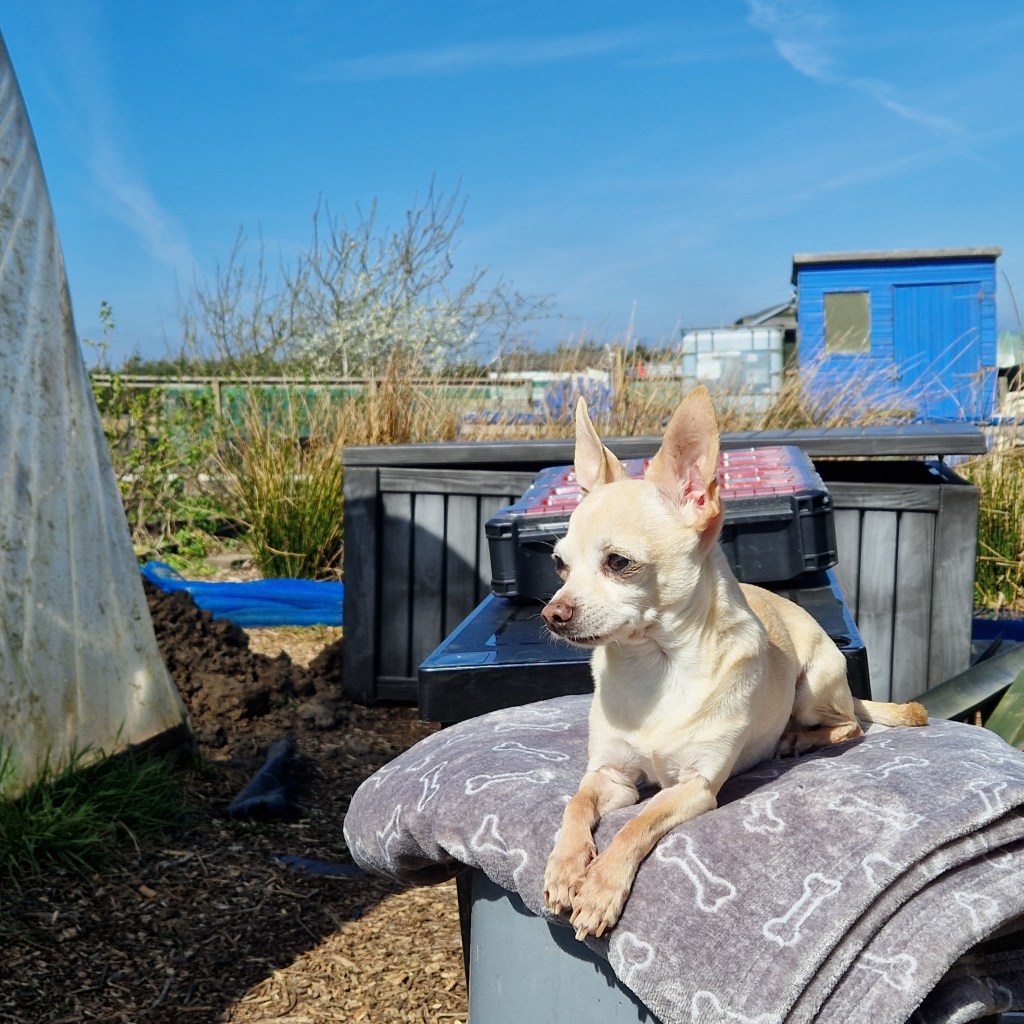
For example – After the first draft, I make myself take a few days away. I have a desk ban. A book ban. On purpose, like a responsible adult. I clean the house because it desperately needs it by then (don’t ask). I catch up on chores, which actually helps me process my books and find thoughts and flaws hidden in my subconscious I file to fix on return (see note on Tesco and zoning out, as this is a repeat behavior). We go to the allotment because I have one for the pure basis of forcing myself into fresh air and green things. Weeding is a really good way to let your brain work out, rooting out all the crap from what you just wrote. I deliberately force myself into the real world and away from my desk. Otherwise I would completely crash and burn. Instead of only semi-doing it.
It does not take long before my brain starts suffering withdrawal, though, and like some untreated addict, I start getting itchy for my characters. The characters are still there, calling me back with their damn siren song. After a couple of days, the pull becomes too strong, and once I sit down again, I return to hyperfocus for another few days while I work through the next stage. My process tends to move in cycles of total immersion, forced recovery, and total immersion again. I do this between every single pass until completion.
The crash always comes
So here is where I come back to my betas warning me that they see the emotional collapse of mankind happening in real time. Or the breakdown of their author. Once the deep emotional work stops, I crash. Literally and physically. We have already figured out what this is, since it happens every time I release the last book. Within a couple of days of Kindles going live. My beta team warns me because they know it is coming; I know it myself because I can feel my brain lagging and my body starting to object. With almost unfair punctuality, I can experience flu-like illness for around two weeks afterward and emotional burnout. It feels as though my mind and body wait until the work is finished to process everything I held back while writing. We think this is down to being autistic and having to process a shedload of pent-up emotion in one fell swoop with the stress of the deadline ending.
I do not stop working completely during that period because I clearly hate myself and masochism is also part of my nature, but I switch to easier stages. I watch the release, make promotional material, write blog posts and emails, compose songs, tidy my website, and handle practical tasks that don’t require me to tap into the story’s emotional core. I also make covers for new ideas, character images, magazines, bonus books, and songs during these downtime stages. Flesh out new ways to torture myself and save more clutter on my groaning PC.
Apparently, my version of resting still involves making a ridiculous number of things. 😂But I also craft and make things with my hands to turn my brain off.
The extras are how I say goodbye
I see many authors asking where or why I find the time for all that comes after the main books. Bonus material, magazines, songs, etc. I am seen as a one-woman marketing machine, apparently. But those after-creations are not only promotional work; they’re still part of my overall process in the ‘come down’. They help me wrap up the story and say goodbye to the couple. When I have spent weeks living in their world and experiencing everything through my female lead, finishing can feel like a breakup. Or a sudden loss of my entire job. Like I am losing real family or loved ones or even just my routine in my daily life. I am no longer carrying the main story or trying to solve its emotional problems, but I can celebrate what I created and slowly loosen my grip on it.
Around this point, I usually remember I have an actual family and a real human man who lives in the same place as me, and I make formal introductions to remind myself who they are. It usually involves group therapy and some kind of movie night because the urge to talk to the family I just sent to Amazon is very surreal.
How difficult that goodbye for that cast feels depends on how deeply immersed I was and how quickly I produced the trilogy. In the past, I left more time between books. I would step away, then later jump back into the couple’s world for the next part. It was a gentler process because I had already practised leaving and returning. With more recent books, especially when I write and release all three close together, I stay consumed by the same world for weeks. By the end, I am exhausted by the characters, but I am also deeply attached to them. Leaving that world can feel less like a gradual breakup and more like a sudden death. One day it is running constantly inside my head, and then it is finished.
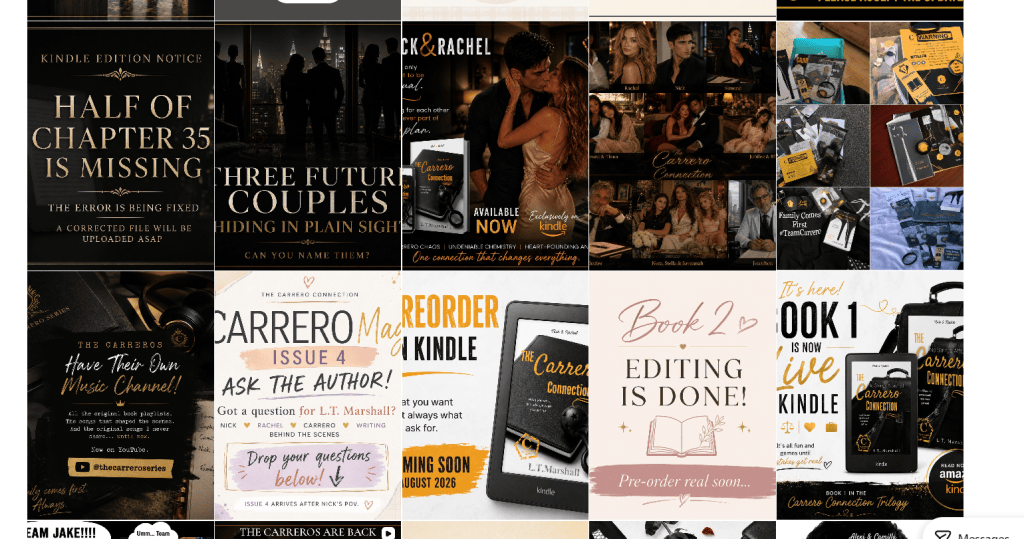
Giving the couple the Book 3 ending they deserve finally provides closure, but it doesn’t help me mourn their loss. Tying up the loose ends reassures me that I am not abandoning them. Their story is complete, and I can send them on their way. I do that through my endless annoying social media posts, blogs, and bombarding my fans with music.
Sorry not sorry. You guys are literally my emotional punch bags for my very real breakup. Hold my hand.
Fast does not mean rushed
I know my release speed may surprise people, and it is, after all, what prompted this overly explained, far too long, and in-depth process blog.
In a world where AI can produce text in seconds, releasing books quickly may make some people question how they were created. The truth is that I have always written this fast, and I cannot remember a time when I didn’t. I learned to type in high school (computer ed class….wow, I am old) on old-school, huge computers that hummed at you and took up half a couch, and I lived through dial-up. (I even hear it in my flashback at the mere mention wheeeee, eek oooh awww aghhh.) Modern tech and keyboards feel like rocket-powered skates.
You can ask my loyal long-term fans who existed before AI. Or ask the betas who see my incoherent first drafts and sit with me all day long while I sweat through seventy-two cups of tea. No way AI would ever offer them the gutter trash I expect them to wade through, decipher, and try to turn into coherent sentences.
When my children were younger, I was simply kinder to myself in how I fed you guys book releases. I put longer breaks between books because family life required it, and because annoying children expect mothers to actually mother them (I know, right? Rude.). Now they are teenagers (yay for me, not), I can sit down for a solid six weeks and write, edit, and release three novels one after another. Because ignoring teens is a far more blissful existence than having to talk to them. I can do it, but that does not mean it is easy or that it has no cost.
The words may arrive quickly because the story has already been growing for weeks. The first draft may take seven days because I barely leave my desk. Then the book goes through live beta feedback, multiple complete editing passes, continuity checks, proofreading, and all the work required to prepare it for release. Speed doesn’t remove the work. It concentrates it. A well-oiled team means the process runs smoothly. We are good at what we do now. It takes a toll on my energy, fatigue, and health. I am not saying that for sympathy. It is simply part of the honest explanation of how I work. It’s a me issue, and one I could avoid by writing slowly, but then I probably would never finish a book.
It’s a flaw in how I create, but it’s also what enables me to do so.
There is no single version of my process
After all of that, I still cannot give you one perfect formula for how I write a book. I am sorry, and if you feel betrayed or failed, then I only have shrugs for you. I once was told there is no right way to write and that we must all find our own way. I am living proof of that motto because in all things I do, I do it my waaaay (Sorry I started singing)
Sometimes the story arrives almost complete. Sometimes I have to construct it from bare bones. Sometimes a character begins with a clear voice. Sometimes they are a faceless figure standing in one emotional scene. Sometimes the playlist leads me. Sometimes it is the cover. Sometimes I know the whole journey, and sometimes I have to trust that I will understand Book 3 when I finally reach it. Sometimes it’s one scene idea sat in a folder on my desk for three years until one day I suddenly have a full idea to match it. And sometimes, just for the fun of it, I sit down with a blank page, write something on the spot, and have no idea what to do with it because I like adding layers to my self-hatred. Although what remains consistent is the intensity.
I collect stories through feelings, sounds and images. I let them grow until they become worlds. Then I step inside, live with the characters, write until they are safely at the end, and create everything I need to help myself say goodbye.
It may look fast from the outside. Inside my head, it has been happening for much longer.
So, if you came here as a writer hoping for a magical cheat sheet, I am sorry I wasted this much of your day only to tell you to find your own way. The only useful advice I can offer is to stop measuring your process against someone else’s. Maybe your brain needs a colour-coded spreadsheet, a strict daily word count and a sensible bedtime. (What even is that?) Maybe it needs a faceless character stalking you through the bushes while a playlist emotionally manipulates you into writing their trauma. (Why is it only now that sentence alerts me to the fact I might actually need therapy) Whatever gets the book out of your head and onto the page is probably the right method for you. I’m a fan of winging it your way.
And if you came here as a reader wondering how I release books so quickly, now you know. It is not magic, a secret shortcut, or a suspiciously well-rested author. It is months of thoughts stored in images, music and random files, followed by weeks of hyperfocus, beta readers translating my dyslexic chaos, endless editing passes, too much tea, an alarming amount of Irn-Bru and a family surviving on takeaway. So technically my books take several months each.
The next time I disappear, you will know I am not ignoring everyone. I am probably sitting in my goblin hole, being harassed by imaginary people and wondering why I gave them so many emotional problems. (god, I attract the broken) I will eventually return with another book, several unnecessary extras, and a fresh emotional breakdown for us all to enjoy together. Because apparently I am dramatic. (who knew?)
L.T. x
Discover more from
Subscribe to get the latest posts sent to your email.

That’s why you do such a great job 😍😍😍 – you write amazing books and wanderful songs. Thanks and keep it up!!! 👍😍
LikeLike
Thank you so much xx
LikeLiked by 1 person