
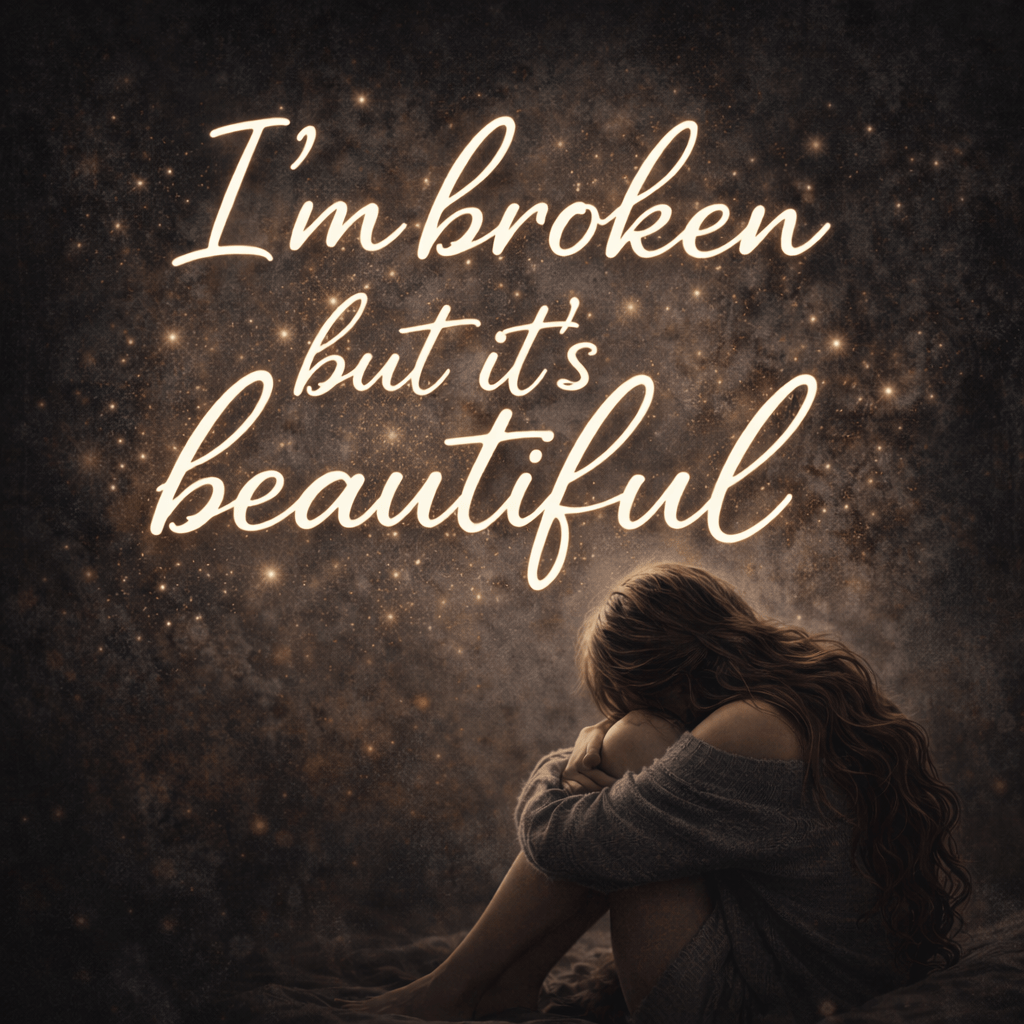
This is for the girl or the woman sitting in a dark place, wondering whether this is simply how her life is going to be.
I need you to know that it isn’t.
There is light at the end of your tunnel, but you do not reach it by waiting for someone to arrive and rescue you. You reach it by continuing to move toward it, even when you are exhausted, even when you feel contaminated by what has happened to you, even when you are convinced you are too damaged to ever feel normal. You reach it by believing that one day you can climb out fully, and by trusting me when I tell you that you can.
I learned very early that no one was coming to save me. That lesson did not feel empowering at the time; it felt frightening and deeply lonely, and far too heavy for a child to be carrying. It meant that if I was going to survive, I would have to do it myself, which is a thought no child under the age of ten should ever have to form, let alone accept as truth.
Domestic violence was already part of my life before I turned six. I did not grow up in innocence and then encounter trauma later; I grew up alongside it, as though it were simply another piece of furniture in the house. The tension in a room shifting without warning, the awareness that adults could erupt, the instinct to go quiet and watch and make myself smaller; those were not coping mechanisms I developed as a teenager. They were part of my childhood language, something I absorbed before I even understood what I was absorbing. I watched violence. I watched my brother try to shield me from it in my mother’s absence. I learned early that protection was fragile and that sometimes the only thing you could do was stay very still and hope the storm passed over you.
Six was when my mother left, and everything changed shape in a way I could feel but not fully understand. It was not the beginning of the violence, but it was the beginning of a visible fracture, the point where whatever illusion of stability I had dissolved. After she left, the instability deepened. I experienced abuse physically, sexually, and mentally.
New people came into my life during that time, and not for the better. I was moved between two households, two parents at war with one another, each carrying blame and anger and their own version of the story. It was messy and loud and confusing, and I felt as though I existed somewhere in the middle of it, belonging fully to neither side. I did not feel rooted anywhere. I felt as though I was being passed between environments that were unstable in different ways, absorbing tension from both, never entirely certain where I was supposed to feel safe.
At eight, my two older brothers ran away from home a few months apart and never returned. It was not my first experience of loss; that had already happened when my mother left. But it was the moment I realised I was losing my only shields. They had been my allies in a house that often felt unpredictable. They had been the older bodies standing between me and things I did not always understand. When they left, something protective disappeared with them.
At the time, I did not have compassion for why they went. I remember resentment as much as heartbreak. I remember feeling abandoned by them, angry that they could leave us behind, angry that I was still there holding everything together with a baby brother at my side. I did not yet have the maturity to see what they were living through themselves – malnourished, bruised, broken young teenagers carrying more than they should have been carrying. That understanding came much later. At eight years old, all I knew was that the house felt more exposed without them.
At nine, I ran away from home, and I did not do it only for myself. I did it because my baby brother was covered in bruises, and I could see what was happening to him. Staying no longer felt survivable. I remember holding his hand and knowing that if I did nothing, I was complicit in letting it continue. I was thinking about safety as though I were much older. I was measuring risk, weighing what we knew against what we did not, trying to calculate which version of danger we could endure. I chose what felt like the lesser harm, which is not a decision a nine-year-old child should ever have to make.
Not long after my mother finally got us back full-time and the court granted my father weekend visitation, he abandoned us.
It was structured and official, there were weekends he was meant to collect us, arrangements agreed and signed and formalised, which somehow made it worse when he began to unravel from it. The first time, he arrived and left us at a neighbour’s house instead of spending the day with us. We waited there, confused but trying to behave as though this was temporary, as though adults had reasons children did not need to question, until eventually we were sent home. The second time, he simply did not come at all.
My brother was six. He stood on the front steps and waited, watching the road with the kind of hope only a child that young can still hold onto. He cried when the time passed, and no car appeared, but he would not come inside. He kept looking out, as though maybe he had missed something, as though if he just stayed long enough, his father would arrive and everything would make sense again. He did not understand what was happening. He still believed.
I sat beside him in the rain and felt nothing.
Not heartbreak. Not rage. Just a hollow, quiet emptiness that I can only describe now as recognition. I already knew he was not coming. I do not know when I learned to recognise that pattern, but I had. I waited because my brother was too little to sit there and cry alone. I waited because I was the older one, and that was what I did by then – I stayed. I held space. I endured.
We sat there for hours. No car. No phone call. No explanation.
That was how it ended.
He built a new life – a new wife, a new daughter, a new family – and we became something separate from that story, something he seemed determined to distance from his side of the family. And that kind of abandonment does not explode in dramatic scenes; it settles quietly into you. It teaches you that you can be replaced without warning. That love can withdraw itself without confrontation. That sometimes you are the one who understands before anyone else does, and you are the one who has to sit in the rain anyway.
By twelve, something in me had hardened so completely that I did not recognise it as change; it just felt like how I was now.
I remember one night standing outside my mother’s bedroom and hearing her cry. I heard my stepfather trying to comfort her, his voice low, hers breaking in a way that made my chest tighten. She was crying because I no longer expressed emotion. Because I no longer told her I loved her. Because when she tried to hug me, I recoiled. Because I acted as though I no longer needed her, and perhaps worse, as though I no longer felt anything at all. As though I existed in their home with my siblings, and yet I was so far away from all of them. I didn’t cry or smile or react…I just existed. I now know I was dissociating most of that period. I still sometimes do.
She had fought to get us back. She had rebuilt our lives. And I had become distant and unreachable. I was 12.
I stood there listening. I felt bad. I understood, in that quiet way children sometimes understand things without language, that I was the reason she was hurting in that moment. But I did not react. I did not go in. I did not cry with her. I did not apologise. I did not soften.
I went back to my room and lay on my bed staring at the ceiling all night, feeling like a villain in my own story. Not because I hated her. Not because I did not love her. But because something in me had shut down so thoroughly that I did not know how to turn it back on.
It is a strange thing to be twelve years old and already feel emotionally unreachable.
It was around that time that I met my best friend, and something shifted for the first time in years. For the first time, I realised my story was not singular. We did not sit down and confess everything in one dramatic exchange; we shared pieces cautiously, in fragments, in sideways conversations that slowly revealed the truth. We recognised familiar patterns in each other’s lives without needing to spell them out. Through her, I began to understand that what I had lived through was not some strange defect unique to me. Other girls were navigating damage too. Other girls were learning to cope in ways that did not always look like coping from the outside. That realisation did not heal me, but it loosened the isolation that had wrapped itself tightly around me and told me I was not uniquely broken.
She became my softer side in ways I did not even realise at the time. I allowed her to hug me. I allowed her to hold my hand. I allowed her to be the person I could tell secrets to, which was not something I gave easily. In her presence, my body learned, slowly, that touch could exist without harm attached to it. That closeness did not always lead to something being taken. She did not fix me, but she reminded me that I was still capable of connection.
From twelve to fourteen I was trying to learn how to exist in the world like a normal teenage girl while carrying experiences that made me feel both older and younger than my peers. Puberty arrived, and with it came attention that did not feel flattering. I tried to make friends. I tried to open up. I tried to find my tribe. Sometimes I felt naïve and too young for the things happening around me. At other times, I felt as though the people my age were living in a different reality entirely, worrying about things that felt trivial compared to what I had already seen.
At fourteen, a boy from our extended friend group announced that I was his girlfriend without ever asking me. There was no conversation, no question, no space for me to agree or disagree. It was simply stated, as though my part in the decision did not matter. I remember hiding from him for days, avoiding the places I knew he would be, changing routes through corridors, waiting for him to lose interest because I did not yet know how to confront something that felt so wrong.
He touched my hand once, casually, in a way that might have seemed harmless to anyone watching, and my body reacted as if something serious had just happened. The reaction was immediate and physical – a tightening in my chest, a rush of panic, a sense of being invaded. I could not explain why something that appeared small to others felt overwhelming to me, but my body understood threat in ways my mind could not yet articulate. I had already learned that touch was not neutral.
In the end, my best friend began dating him, and I remember the feeling of relief, like freedom. Not jealousy. Not betrayal. Just freedom. The pressure lifted. The expectation dissolved. I no longer had to hide or endure or explain myself. It felt like escaping something without having to fight it directly.
The complicated part is that I had liked him. I thought he was cute. Handsome. I was not immune to attraction, and I was not indifferent. But I could not allow him to try and be anything to me. I could not let him get close enough to claim space in my life. Wanting someone and feeling safe with them were not the same thing, and by then my body would always choose safety over curiosity.
At sixteen, a school friend force-kissed me outside school. Someone bigger, popular, someone not really on my radar as liking me, so I never even thought he would. I went home and vomited. I turned off the lights and lay in the dark, crying because I could not explain why it felt so violating. It was not romance. It was not a story to laugh about. It was another reminder that my boundaries could be crossed and that my discomfort was something I was expected to absorb quietly. I never spoke to him again, and people made fun of me for being weird about boys, and maybe I was into girls.
At seventeen, I kissed a classmate properly for the first time. He was a boy I was friends with and trusted, and it happened in a park because my stepsister was kissing his friend, and we were, in that awkward teenage way, copying what felt expected of us. It was mutual. It lasted several minutes. Nothing happened beyond what I agreed to. He did not cross any lines. By any ordinary standard, it was simply a first kiss.
I remember being blank-faced and polite when we parted, as though I had just completed something routine. I did not react dramatically. I walked home as if nothing significant had taken place.
But when I got home, I went straight to the shower. I stood there feeling unsettled and physically unwell, overwhelmed by a sense of regret I could not fully explain. Nothing harmful had happened, and yet my body responded as though it had. That disconnect between what my mind understood and what my body felt was confusing and deeply uncomfortable. It was not about him. It was something already living inside me.
When I saw him again, I behaved as though it had never happened, and he did not pressure me to talk about it. We slipped back into being distant friends. There was no confrontation, no fallout, just a quiet shift in distance that neither of us challenged.
During those years, I was learning to adapt. I was learning how to navigate friendship and attraction while guarding myself. I was learning how to appear confident while feeling constantly alert. I was learning how to belong without surrendering control.
In high school, I had a crush on the most popular, handsome boy in school for three years. Everyone knew who he was. Everyone admired him. I never tried to get close to him, and that was not because I lacked confidence. It was because I did not want to. I chose him deliberately. He was safe because he was distant. Safe because he was a year older. Safe because he existed outside my friend circle. I could admire him without risk. I could feel something without being exposed by it. He was a controlled fantasy, one that required nothing from me.
And then, over one summer, something shifted. It felt as though I grew up overnight. My body changed in ways I could not ignore. We moved house, and somehow fate placed us directly across the street from him. My bedroom window looked straight at his house. I had to walk past his front door every morning to get to the bus stop. His mother became my part-time employer, which meant I had to go into that house regularly. The distance I had carefully maintained disappeared without my consent.
That year, he started noticing me. He teased me at school. He grabbed my bag in corridors. He made jokes. He made sure I knew I was on his radar. For other girls, that might have been a dream unfolding. For me, it was the collapse of safety. The crush died almost instantly. The moment he moved from distant to close, from abstract to tangible, something inside me retreated. I started hiding again. I avoided him and his friends, even when they played football right outside my front door. I chose different routes. Different timings. Different spaces. I erased myself where I could.
Years later, after I had moved away, a friend told me he had mentioned me, that he had liked me. And I remember feeling a strange, quiet irony. The boy I had chosen because he was safe had, in reality, noticed me all along. But by the time he stepped closer, I no longer knew how to stand still.
At nineteen, I moved three hundred miles away after convincing my mum that we needed a city and bigger horizons. I was restless in a way I could not fully explain, as though something inside me was pushing against safe and stable and telling me that if I stayed still too long I would suffocate. I did not yet understand that sometimes the urge to run feels like ambition when it is also avoidance.
Despite forging ahead with dreams and goals and presenting as confident, I was also a rebellious mess. I sang in bands. I stood in the limelight. By day, I played the role of the sweet singer in a pop girl band, smiling, performing, looking composed under stage lights while people saw talent and youth and possibility.
By night, I was chaotic, volatile, and angry. I drank too much. I got into fights with girls in bars over pride and territory and things that did not matter. I was aggressive toward boys who tried to date me properly, pushing them away with coldness and sharp edges, yet I would kiss strangers on a dancefloor and disappear before they could ask my name. I never went beyond that. I did not want sex. I did not want intimacy. What I wanted was to be admired, to be seen, to hold a boy captive long enough to dazzle him with a kiss, a dance, a smile, and then leave without a trace and move on to someone else.
It was power in its safest form. I could choose the moment. I could choose the exit. I could feel desired without having to risk being known. I wanted intensity without exposure, validation without surrender. If a boy showed real kindness and wanted to date me in a way that felt steady and sincere, I became aloof and cool and deliberately difficult. I treated him badly so that he would end it first, so that I would never have to risk being the one left behind. Rejection felt manageable if I orchestrated it. Being chosen and then abandoned did not.
I had nightmares. I sleepwalked. I carried rage I did not yet know how to name. I was both visible and untouchable, a nightclub queen in control of her image and a girl whose nervous system was still braced for impact. In that time, I became wild, irresponsible, and hard to deal with. My mother despaired, and I had also moved out, so they no longer had any control over my life or me.
By twenty, I fell into my first real love, and it did not begin recklessly. It began in a way that felt measured, almost logical. He was younger than me, but he carried himself as though he were older – mature, street-wise, emotionally articulate in a way that felt grounded rather than showy. He was not my usual type physically at all, and that mattered more than I admitted at the time. I told myself that this made him a safer bet. If I were not ruled by lust or dazzled by looks or swept up in raw chemistry, then maybe I would think clearly. Maybe I would choose well. So I never actually fancied him.
He had been my friend first. We had talked, properly talked. Shared stories. Shared frustrations. Shared pieces of ourselves in ways that felt steady and unforced. I believed that friendship meant safety. I believed that building something from trust rather than attraction would protect me from the chaos I had known before. It felt mature. It felt intentional. It felt like I was finally doing things the “right” way.
For the first time, I allowed someone closer than I ever had. I let him occupy space in my life that I usually guarded. I let him see more of me than performance and confidence. I told myself that this was growth – that I was finally choosing connection over control. I let myself trust someone to not only share my life, but my bed, and he even moved into my apartment. I thought I was healing and letting go of the past because I could let someone touch me as long as I got to control it.
But intensity crept in quietly. What I first interpreted as depth began to feel destabilising. His maturity sometimes tipped into something harder, sharper, and unkind in ways I did not expect. The steadiness I thought I was choosing began to blur into volatility. Arguments felt sharp and personal, insult loaded, and things escalated quickly. Reassurance never quite lasted. There was always another shift in tone, another moment where I felt I had stepped wrong.
He began playing a quiet game of cat-and-mouse with my head and my heart. If I annoyed him, if I became too clingy, if I disagreed too strongly or did something he framed as disobedience, there would be a break-up. Sudden. Final. Punishing. I would be discarded and left reeling, trying to understand what I had done wrong. He would move on quickly, be seen with other girls, and make sure I knew he was fine without me. So it wasn’t cheating, but to me it held the same weight and betrayal on my soul.
And then he would return.
Apologies. Intensity. Passion. Grand gestures. Lovebombing before I even knew that word. He would pull me back in with certainty and urgency and promises that felt like oxygen after suffocation. I would forgive him. I would try harder. I would believe that this time the ground would stay steady.
It never did.
The cycle repeated itself until my nervous system was constantly braced. I began measuring my behaviour, watching my tone, adjusting my needs so I would not trigger the next rupture. I thought if I could just be calm enough, loving enough, careful enough, the volatility would stop. Instead, I found myself shrinking and reacting in equal measure – anxious, defensive, desperate to keep something that was quietly eroding me.
And slowly, almost imperceptibly, I began to disappear.
The girl who had once been sharp and defiant and unapologetic started second-guessing herself in small, daily ways. I questioned my memory. I questioned my reactions. I questioned whether I was too much, too emotional, too demanding, too difficult to love. Too broken. I stopped seeing my scars and defence mechanisms as survival and began to see them as flaws. He did not have to say the words outright for them to settle inside me; they were in his tone, in the withdrawal, in the comparisons, in the subtle implication that I was the unstable one. He called me crazy, and eventually I began to feel crazy. Worse than that, I began to act in ways that looked crazy because I was reacting to something that kept shifting beneath my feet.
When he left, I retaliated in the only way I knew how. I went out and kissed other boys. I drank. I flirted. I dated. I partied harder. I told myself I was reclaiming power, but part of me was also trying to wound him the way I felt wounded. And when he came back, because he always came back, I learned to use those things as weapons. I let him see that I was desired. I let him believe he could lose me. I turned admiration into leverage.
But beneath all of it, my self-worth was thinning.
My self-esteem frayed at the edges until I began to believe that perhaps I was the common denominator in every rupture. That perhaps the chaos followed me because I created it. I had survived so much before him, and yet in that relationship, I felt smaller than I ever had. Smaller than the child who had learned to be still to stay safe. That relationship did not just hurt me; it rearranged how I saw myself. I had chosen him because I thought friendship would make it safe. Instead, I learned that familiarity does not prevent harm. Sometimes it makes it easier to excuse.
Because he had been my friend first, I excused things I might not have excused in someone else. I believed that if I tried harder, communicated better, and loved more deliberately, the ground would steady itself. Instead, I felt myself becoming reactive again – defensive, volatile, anxious in ways I thought I had grown past.
The pattern of trust preceding harm repeated itself. I had believed that choosing someone who knew me first would protect me. It did not. Finally, it blew up to violence… and after being choked, having my house smashed down, and a crate of beer thrown at my head across a hall, I finally let go. The switch flipped, and my heart did what it always did. I stopped feeling. I turned off emotion, and I was able to walk off without a single regret or desire to have him chase me again. It did me a favour.
Between twenty and twenty-two, violence entered my life again, and once more it came from someone I trusted. At twenty-two, a male friend crossed a line while I was intoxicated and unconscious on his mother’s couch. I woke up mid-way, confused and disoriented, my body reacting before my mind could fully process what was happening. I froze. I did not fight. I did not scream. I recoiled inward and became still, the way I had learned to do as a child when stillness felt like survival.
For a long time afterward, I carried guilt about that reaction. I questioned why I had not done more, why I had not been louder or stronger or more forceful. It took years to understand that freezing is not consent; it is a nervous system response. In that moment, I was not twenty-two. I was seven again. Still. Silent. Numb. It haunted my dreams, it made me recoil again from physical contact. It made me drink and party and want to forget.
The betrayal reinforced something I had been trying not to believe – that familiar faces can still be dangerous. That friendship is not immunity. That trust does not guarantee safety.
He did not disappear after that. He inserted himself further into my life. What followed was not a single incident but a period of intrusion I then had to navigate and extract myself from. Removing him was not clean. It came with fallout. It came with stress and fear and consequences I paid for long after the event itself had ended.
So I ran. I left. I cut off before I could be cut down. From the outside, it may have looked dramatic, impulsive, even unstable. From the inside, it was survival logic. It was the same instinct that had made me calculate exits at nine years old, the same instinct that had made me learn to detach and become still. Only this time, instead of freezing, I moved.
I cut off my friends. I walked away from people without lengthy explanations or any explanation at all. That emotional switch was flipped, and I discarded everyone I knew, even my best friend. I told no one. I just woke up when it was ready and walked away. I switched jobs. I moved house quickly, almost urgently, making sure no one could easily trace where I had gone and changed my phone number and deactivated the only online account I had. I did not linger long enough for doubt to creep in. I did not negotiate my departure. I removed myself. Erase, forget, restart.
It was not elegant. It was not gentle. But it was decisive.
I reinvented my life almost overnight, not because I was fearless, but because I had clearly understood by then: if I did not protect myself, no one else would. Reinvention was not about glamour or ambition. It was about control. It was about drawing a hard boundary around my existence and saying, this is where you stop.
And then, after all of that running and cutting and rebuilding, I met the man who has now been my partner for twenty-two years.
It happened in a bar on a night that was meant to be nothing more than a college night out with the girls. The evening unravelled quickly. Plans shifted. I got separated from my friends. I found myself alone, dealing with men who were too close, too loud, too entitled to my space. I was harassed. Followed. I could feel that old calculation returning, scanning exits, measuring threat, deciding how quickly I could leave without escalating anything. I remember saying loudly, ‘I am so over men…never ever will another man get access to me.’
Around that time, I had recently reconnected on social media with a childhood friend I had known when I was nine. We had agreed to meet up at some point. When I found myself alone and uncomfortable that night, I saw she had messaged me. I told her where I was, and she replied simply, “Come meet me.” So I left.
We went into another bar together to get away from the chaos, and that is where I met him.
He noticed immediately that I was not a girl you casually chatted up. I was not someone who responded to easy flirtation or bold advances. He did not crowd me. He did not test me. He did not push for attention. He approached me carefully, almost cautiously, as though he could sense that I was layered and guarded and not to be handled carelessly. He was friendly but kept his distance. He allowed space between us. He watched more than he pursued. He told me later that I seemed ‘incredibly high maintenance with a wall of, bitch, back off, around me’. He said I looked hostile at first glance, but that underneath it, he could see something smaller and softer, something that felt vulnerable despite the armour. And I was pretty…..of course.
I was attracted to him, and that frightened me enough that I almost ran. I rejected his number later that night. I rejected his offer of a drink. I rejected the idea of his company more than once. Old wiring kicked in quickly. If I kept him at arm’s length, I stayed in control. It was that childhood friend who vouched for him, and softened me enough to agree to a date after a whole night in his company.
He persisted softly. Not aggressively. Not with ego. He stayed with my friends rather than isolating me. He let the night unfold without trying to corner it and sat away from me, but always including me in the conversation when I silently glared at men who had joined us. He allowed me to unwind at my own pace. There was no pressure to be impressed, no intensity masquerading as romance. No threat.
Eventually, I agreed to a date. We went to the cinema. There was no reaching for my hand. No attempt to close the distance. We sat side by side, watching the film, talking afterwards, laughing, and then went to eat. Just existing in each other’s space without demand. It was so unfamiliar that it almost felt suspicious. Calm can feel strange when you have been trained to expect turbulence, and I kept waiting for the red flags and danger signs.
He did not try to break me open. He did not try to conquer me. He simply stayed, steady and patient, and over time, that patience began to chip away at the armour I had welded into place. He let me initiate first touch, first hand hold, first kiss, and he would gently pull back if he sensed even the slightest hint of me retreating.
The first time we were intimate, I changed my mind partway through, my body tensing with old fear and expectation, I braced for frustration, for pressure, for disappointment. Instead, he stopped immediately. No sigh. No irritation. No wounded ego. He simply shifted us back to lying side by side, talking, as though nothing had been interrupted and nothing needed to be completed. Not touching, just giving space and talking of nothing in particular in the dark. Like it was no big deal.
It was such a small moment on the surface, but it rearranged something inside me. For the first time, stopping did not come with punishment. Pulling away did not come with anger. My “no,” even when it arrived late and shaking, was enough.
Over time, something shifted, but it did not shift overnight, and it did not arrive in a dramatic moment where I woke up healed and whole and free. The armour I built stopped being only a reaction and became a strength. I did not dismantle it. I learned how to carry it without letting it carry me.
Love did not heal me. If anything, our first years together were turbulent in their own way. We were two people trying to build something steady while I was still carrying unprocessed wreckage. I had a lot of heartbreak trying to live together. I had habits that did not disappear just because someone treated me well.
Love complicated the landscape for me because it forced me to confront parts of myself I could avoid when I was single. In friendship or casual connection, I could retreat and reinvent. In partnership, you stay. You face things.
There were times when he said I was impossible to live with. He was not entirely wrong. I could be fiercely defensive, quick to interpret tone as threat, quick to escalate instead of soften. My insecurity showed itself as jealousy. My fear showed itself as control. My toxic defence habits were subtle but persistent. I would test him. Push him. Withdraw to see if he chased. Threaten to leave before I could be left. My temper flared fast and hot. My instinct to run did not disappear just because someone stayed.
I was still that girl whose nervous system had been wired for survival. I just looked more functional on the outside.
There were arguments I would never apologise for, not because I was right, but because apologising felt like surrender. Even when I knew I had overreacted, something inside me refused to bend. Sorry felt dangerous. It felt like lowering my guard in a room where I had once learned lowering your guard could cost you. I was emotionally cold at times.
There were times he wanted softness, and I met him with defiance instead. When he reached for reassurance, I responded with independence. When he wanted closeness, I withheld affection. I would refuse touch not because I did not love him, but because control felt safer than vulnerability. I could not always distinguish between yielding and losing myself.
If something upset me, I did not calmly talk it out. I exploded. I escalated. I said sharp things instead of honest ones. I tried to win rather than understand. My instinct was not to repair; it was to defend. I attempted to control the emotional temperature of every room we stood in, because if I controlled it, I would not be blindsided by it.
There were moments when he stood in front of me simply wanting peace, and I interpreted it as a threat. Moments when he asked for connection, and I heard criticism. Moments when he needed comfort, and I responded with resistance.
I was not cruel. I was scared. But fear does not make the impact softer for the person standing opposite you.
The hardest part of growing was realising that survival behaviours, once necessary, can become destructive when the danger has passed. The same aggression that once kept me safe could now wound the one person who had never tried to harm me.
And that realisation did not come gently.
But I chose myself deliberately. I built stability in practical ways because chaos had shaped too much of my early life. I worked hard. I achieved. I became self-reliant not because I distrust everyone, but because I know I can stand on my own and that knowledge soothes something inside me. Independence stopped being rebellion and became reassurance.
I began reading about psychology, about trauma, about how memory lives in the body. I traced my reactions back to their roots instead of justifying them or denying them. I asked hard questions about why my body would tense when someone stood too close behind me, why certain rooms made my chest tighten without warning, why I could be calm one moment and then flooded with anger or fear the next. I started to understand that those reactions were not personality flaws or evidence that I was impossible to love. They were memories. They were survival responses. They were a nervous system trained far too young to expect impact.
My aggression, my fierce temper, my instinct to blow my life up when things felt unstable were not random character traits. They were a child’s attempts to undo a lifetime of scarring. They were protection strategies that had simply overstayed their welcome.
I learned that I have PTSD. I learned how to handle it. I learned how to pause before reacting instead of detonating. I learned how to separate now from then. I learned that strength does not have to be loud or combative. Sometimes it is quiet and steady and chooses not to escalate. Sometimes it is walking away without theatrics. Sometimes it is apologising even when every old instinct tells you not to. Sometimes it’s allowing a hug instead of a snapped reply.
But healing did not erase everything.
The brother who once stood between me and violence died seventeen years ago. Losing him reopened every earlier wound, and for months I went numb again. Not because I didn’t love him, but because loving him hurt too much to hold all at once.
There are still moments when intimacy, even with the man who has been my partner for twenty-two years, can make my stomach feel unsettled and my skin prickle. It is not about him. It is about how my body learned to associate closeness with danger long before I understood what danger was. My mind knows I am safe. Sometimes my body has to be reminded.
I still pull away from touch from people who are not him. I am selective in ways that can look cold. I still struggle to verbalise affection easily. Love, for me, was once tangled up with instability and harm, and expressing it can still feel like exposure. Independence became my armour so early that it is woven into who I am. I am stubborn. I am fiercely self-sufficient. I can appear as though I need no one.
There have been moments when my partner has wondered if I would miss him at all if we broke up, because I stand so firmly on my own two feet. What he does not always see is that the girl who learned to survive by bracing herself is still inside me, quietly preparing for impact even in safe places. My strength can look like indifference. It is not indifference. It is protection.
Overcoming did not mean becoming soft and untouched. It meant becoming aware. It meant choosing differently. It meant refusing to repeat cycles, even when my nervous system wanted to. It meant building a life that is calm, drama-free, and steady, even if my internal wiring sometimes hums with old electricity. What I have written here is not even half of what I lived through. So many more details, scars, and heaviness followed me through life and adulthood. I only gave you the surface story. At times, I thought I would be pulled under entirely, yet the survivor in me could not give up.
If you are reading this from a dark place, wondering whether the damage has already defined you, I need you to understand something clearly: the fact that you adapted does not mean you are broken. It means you survived.
No one is coming to save you. That is not a cruel statement; it is a powerful one. You save yourself. You grip the wall. You stand up. You face what lives inside you, and you learn how to quiet it. You build stability brick by brick. You choose differently, even when it feels unnatural at first.
You may never become someone untouched by what happened. I did not. But you can become someone who understands it, manages it, and refuses to let it dictate the rest of your life.
Light is not a sudden sunrise. Sometimes it is just the decision to keep walking toward it. Sometimes it’s about keeping on getting up, brushing yourself off, and starting again.
And I am walking proof that even a girl who ran at nine, who froze at twenty, who disappeared at twenty-one, can build something steady, can love without fear, can defend others without flinching, and can stand in the world without apologising for having survived.
I am not afraid of men. I am not afraid of love. I am not afraid to defend someone from being hurt. I do not freeze anymore. I’m the first to run headfirst into a fight if someone vulnerable is crying for help.
Safety to me now is quiet. It is calm. It is knowing that no one hurts me and no one does anything I do not allow. It is not dramatic. It is not grand. It is the absence of chaos. It is steady routines and doors that close softly, and a home where I do not brace for raised voices.
Safety is having boundaries that hold. It is knowing I can leave if I need to, but choosing to stay because I want to. It is love without volatility. It is disagreement without threat. It is intimacy without fear.
I pour my past into my books, not because I am still trapped in it, but because it shaped me. I write the girls who fight back. I write the women who survive. I write the men who learn to be gentle without being weak. I hope that somewhere in those pages, someone sees a version of themselves and realises they are not uniquely broken.
I am not the girl who crumbled at seven. I am not the teenager who hid. I am not the woman who disappeared inside a toxic love. I am someone who walked through all of that and built something steady anyway. And came out smiling, kind and confident. She lifts her chin and is fearless enough to chase dreams and conquer new horizons.
And if you are still in the tunnel, still in the dark, still waiting for the light to prove itself, I need you to understand something: you are not weak for adapting. You are not damaged beyond repair. You are a person whose body and mind learned to survive, and survival is not the end of your story.
I am not soft in the way people expect softness to look, but I am not broken. I smile more now than I ever thought I would. I love without fear running the show. And you can too.
If you are in the lowest place right now, hear me clearly. I have stood in places that felt impossible to climb out of. I have been angry and chaotic and volatile and lost. I have been abandoned, violated, and replaced. And I am still here. Not perfect. Not untouched. But standing.
You can stand too.
Discover more from
Subscribe to get the latest posts sent to your email.
